Lardum.Book a Review

Rolling out AI:have you considered...
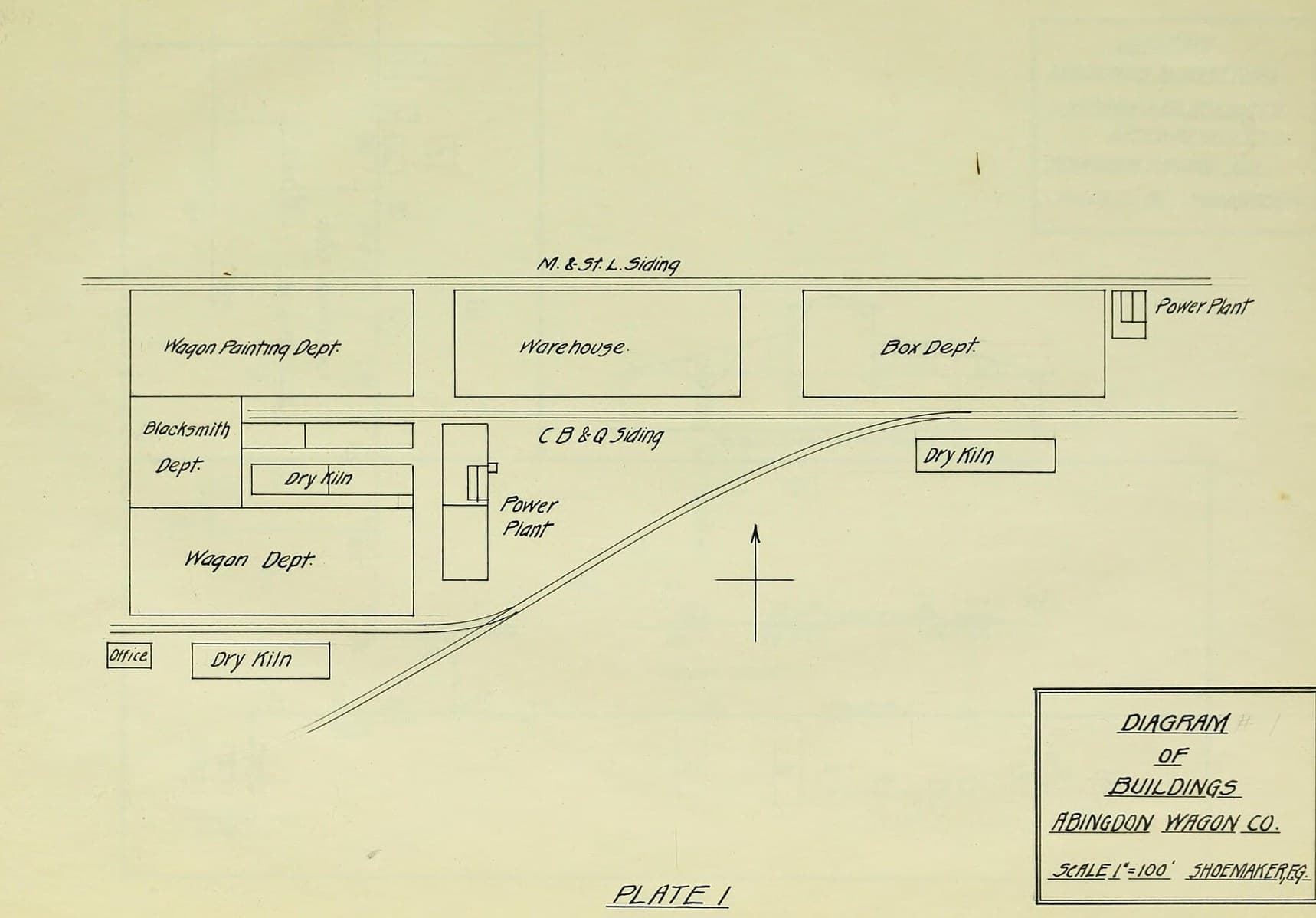
An engineer's diagram of the Abingdon Wagon Co. buildings: the wagon, box and painting departments, the power plant and the railway sidings.
Abingdon Wagon Co., 1914. The buildings were surveyed before any machine was moved.

45 questions to answer before AI goes live across your organisation.

Most AI rollouts don't fail on the technology. They stall because a question nobody asked comes up after go-live: who owns this, what data can it see, how do we know it's working. Work through these before you roll AI out beyond a pilot. Any question you can't answer yet is the next thing to sort out.

Work through it here: answer each question Yes, Not yet or Don't know. Your answers stay in this browser, and anything not settled collects in your open list, ready to save as a PDF.
PDF · 20 minutes · Free, no sign-up

  • 45 questions in 9 sections
  • Tick as you go, saved in your browser
  • Your open list as a PDF

Or take the blank checklist to work through with your team.

All resources

Section 1 of 9

Purpose and the first workflow

A rollout with no single workflow to prove itself on turns into a tool licence nobody uses.

  1. Which one workflow goes first, and why that one?
  2. What problem does it solve that the business already feels: time, cost, errors or capacity?
  3. What would we stop doing, or do less of, if this works?
  4. Have we said no to the use cases that come second, for now?
  5. Who asked for this, and will they still care in six months?
Section 2 of 9

The process

AI added to an unchanged process leaves the bottleneck where it was.

  1. Have we mapped how the workflow really runs today, including the workarounds?
  2. Have we redesigned the workflow, or only added AI to the old steps?
  3. Were the people who do the work involved in the redesign?
  4. Where exactly does the AI act, and where does a person take over?
  5. What happens to the cases the AI can't handle?
Section 3 of 9

Ownership and governance

Without a named owner, AI stays a project and never becomes part of the operation.

  1. Who is the one person accountable for this workflow's results?
  2. What may the AI decide on its own, and what needs a person's sign-off?
  3. How often are its outputs checked, and by whom?
  4. Who can switch it off, and how quickly?
  5. Is it recorded in an AI register alongside every other AI decision we make?
Section 4 of 9

Data and knowledge

In a pilot someone feeds the AI context by hand. At scale, nobody does.

  1. What does the AI need to know to do this job well, and where does that knowledge live today?
  2. Is that knowledge current, and who keeps it current?
  3. Can the AI reach the systems it needs without people copying data in?
  4. Is the data good enough that we'd trust a report built on it?
  5. What data must the AI never see?
Section 5 of 9

People and roles

Tools nobody uses return nothing. Most of the work of a rollout is people's work changing.

  1. Whose job changes, and have we told them how, before go-live?
  2. What will people do with the time the AI saves?
  3. Do we need to consult staff or their representatives about the change?
  4. Who trains people, and is it training on the new workflow rather than on the tool?
  5. Who are the respected people in the team who'll use it first and show others?
  6. How will we know if people are quietly working around it?
Section 7 of 9

Measurement

Without a baseline you can't show the return, and the budget for the next workflow goes elsewhere.

  1. What did we measure before the AI went in: time, cost, error rate or volume?
  2. What result, by when, would count as success?
  3. Are we measuring use of the new workflow, not just logins to the tool?
  4. Who reports the result, to whom, and how often?
Section 8 of 9

Running it

Go-live is the start. Models, prices, data and the business all change after it.

  1. How will we notice if the AI's quality drifts?
  2. What do we do when it gets something wrong: who is told, what is fixed, what is logged?
  3. What will it cost to run at full volume, not pilot volume?
  4. What happens if the supplier changes the model, raises prices or goes away?
  5. When do we review whether this workflow still earns its place?
Section 9 of 9

Telling people

Staff and customers fill silence with the worst reading of what AI is for.

  1. What will we tell staff about why we're doing this and what it means for them?
  2. Will customers know when they are dealing with AI, and do they need to?
  3. Who answers questions once it's live?

Stuck on the ownership questions? The governance template gives every AI decision an owner. For the risk questions, start from the AI use policy.

0 of 45 answered 0 settled 0 not yet 0 don't know
The question nobody asked before go-live is the one that stalls the rollout.
The long empty floor of a textile mill, a belt-driven shaft and its wheels running the length of the ceiling.
Eagle Mill, North Uxbridge.
Two large grindstones in an iron works, each driven by a belt from the line shaft overhead, with tools and offcuts piled on the benches around them.
Grindstones at LaBelle Iron Works, still driven from the shaft overhead.

Start with
one workflow.

Thirty founder-led minutes. No pitch, no framework deck. We look at what you're already running, name the one workflow worth taking into production first, and tell you honestly whether it's worth doing.